What the World Cup Can Teach Us About Training the Brain Under Pressure
- Jennifer Schriever, MA, LPC, BCB, BCN
- 5 days ago
- 3 min read

If you have been following the 2026 World Cup, you know that some of the most nerve-wracking moments come down to penalty shootouts. A single kick, a roaring crowd, and enormous pressure resting on one player's ability to stay calm and focused. Recently, The Athletic reported that the U.S. Men's National Team has been using brain-based technology to help players prepare for exactly these high-pressure moments.
According to the reporting, the team worked with a technology company to monitor players' brain activity while they practiced penalty kicks, sometimes with crowd noise piped in and staffers actively trying to distract them, in order to recreate the stress of a real shootout. The goal was to help players recognize and reach the focused, settled mental state that athletes often describe as being "in the zone," and to make that state more reliable when it matters most.
The exact equipment and protocols have not been publicly shared, and the team declined to go into detail, understandably wanting to protect any competitive edge. But the underlying principle is one we work with every day, and it is worth explaining, because it applies to far more than elite sport.
Focus is a brain state, and brain states can be trained
When we are anxious or distracted, the thinking and worrying parts of the brain tend to become overactive, pulling resources away from the parts that carry out smooth, practiced movement. Researchers studying penalty kicks have observed a version of this. When players were calm, the movement-related areas of the brain were more engaged. When players were anxious or worried about the outcome, activity shifted toward the planning and self-monitoring regions, and this was associated with more missed kicks.
In other words, overthinking in a high-pressure moment can literally get in the body's way. The athlete who can quiet that mental noise and stay in a focused, regulated state has a real advantage.
This is the heart of neurofeedback and biofeedback
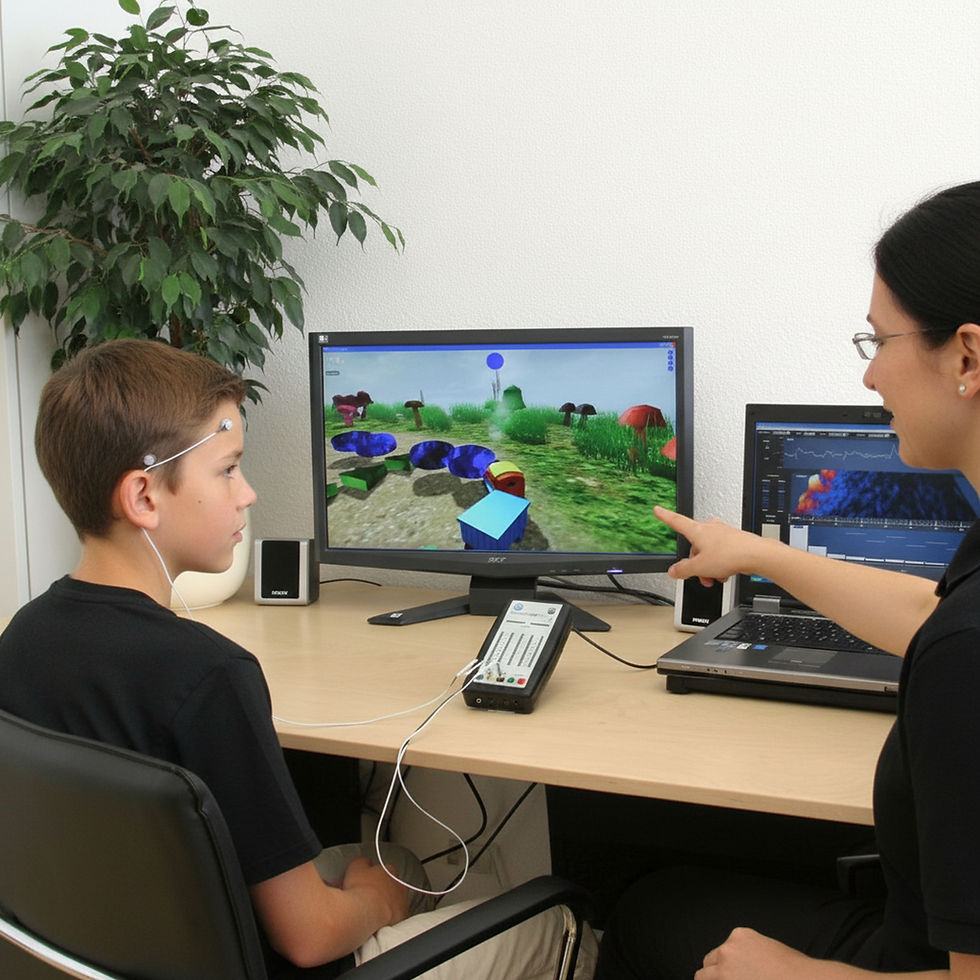
What makes this story exciting to us is that the core idea is exactly what neurofeedback and biofeedback are built on. These approaches use real-time information from the brain and body to help a person become aware of their internal state, and then learn to shift it. Over time, with guided practice, the nervous system gets better at finding and holding a calmer, more focused baseline, even under stress.
You do not have to be a World Cup athlete to benefit from that. The same skill that helps a player stay composed on the penalty spot is the skill that helps a student stay calm during an exam, a professional stay clear-headed in a high-stakes meeting, or a person with a stress-shaped nervous system finally feel able to settle. Peak performance training and everyday nervous system regulation are two ends of the same continuum.
Training the brain toward calm and focus
At Austin Biofeedback and EEG Neurotherapy Center, we have spent decades helping people learn to regulate their own nervous systems using neurofeedback and biofeedback. Whether the goal is sharper focus, steadier performance under pressure, or relief from the physical weight of chronic stress, the work begins the same way, with a clear picture of how your nervous system is currently operating and a personalized, clinician-guided plan to help it function more flexibly.
It is a genuinely encouraging sign to see brain-based training reach the world's biggest sporting stage. The tools we use in our office are grounded in the same science, applied with care to the goals that matter most to you.
If you are curious whether neurofeedback or biofeedback might be a good fit for you, the best first step is a conversation. We would be glad to talk with you about what the process looks like and what it could help you work toward.