Why Some Children Struggle More With ADHD and Anxiety in Summer Than Parents Expect
- Jennifer Schriever, MA, LPC, BCB, BCN
- May 26
- 3 min read

When parents think about summer, they usually imagine relief.
The school stress eases up. The schedule opens up. There are fewer demands, fewer battles over homework, and hopefully a little more breathing room for everyone in the family. And sometimes that is exactly what happens.
But every year at Austin Biofeedback and Neurofeedback Center, we also see another side of summer that catches many parents off guard. Some children actually become more emotionally reactive, scattered, anxious, or dysregulated once school ends.
Parents will say things like, "I thought things were supposed to get easier," or "My child was barely holding it together during the school year, but now everything feels even more off."
What they are noticing is often not a behavior problem. It is a nervous system regulation issue.
Children with ADHD, anxiety, sensory sensitivities, or executive functioning difficulties often rely on external structure far more than anyone realizes. Even when school is stressful, it provides rhythm and predictability. Wake-up times stay relatively consistent. Meals happen at regular times. Expectations are clearer. The nervous system knows what is coming next.
Summer changes that rhythm almost overnight.
Bedtimes drift later. Sleep schedules become inconsistent. Screen time tends to increase. Physical activity changes. Daily structure loosens. Some children become overstimulated from camps, travel, and social activity, while others become under-engaged and disconnected without enough routine or meaningful stimulation.
For many children, especially those with already sensitive nervous systems, that shift can create more dysregulation rather than less.
Sometimes it shows up emotionally. A child becomes more irritable, reactive, or prone to meltdowns. Sometimes it shows up cognitively. Focus worsens. Motivation disappears. Executive functioning difficulties become more obvious. And sometimes it shows up physically through headaches, stomach aches, sleep disruption, or a nervous system that simply no longer feels settled.
One of the things I have noticed over the years is that many children spend the school year compensating constantly. They are working incredibly hard just to stay afloat academically, socially, emotionally, or behaviorally. By the time summer arrives, the nervous system is often exhausted.
What can look like a sudden change is often something that has been quietly building underneath the surface for a long time. Once the structure and adrenaline of the school year fall away, the nervous system has less scaffolding holding everything together.
This is also one of the reasons summer can be such an important opportunity for nervous system work. During the school year, many families are simply trying to survive the week. Summer often provides enough breathing room for the brain and body to begin learning new patterns more consistently and with less stress layered on top.
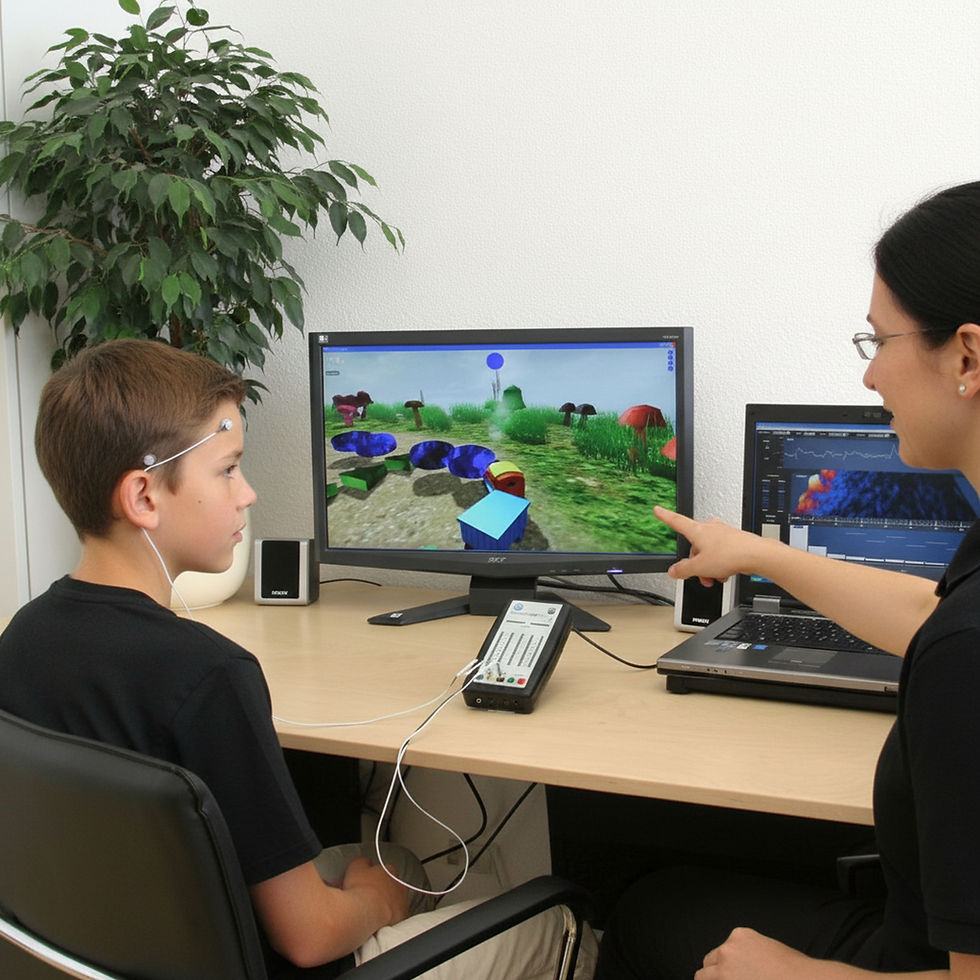
For some families, that process includes neurofeedback. For others, it may involve HRV training, counseling support, improving sleep consistency, reducing chronic stress activation, or helping a child rebuild healthier rhythms after a difficult school year.
The goal is not to create a rigid summer schedule or turn summer into another version of school. Most children genuinely need downtime and recovery. But nervous systems do tend to function better with some degree of consistency and predictability.
Regular sleep and wake times matter more than most people realize. Starting the summer with regular bedtimes can do wonders to help provide structure. Movement matters. Time outdoors matters. Predictable rhythms around meals, activities, and transitions help many children feel more regulated, even if they are not consciously aware of it. Now is the time to decide how you can provide structure to nervous systems in your home that may benefit from it, and then stick with it.
Sometimes, the most important shift is simply understanding what you are seeing through a different lens. Parents who stay more regulated themselves because they understand what the transition triggers, can better help their kids and teens with some well-placed strategies.
A child who suddenly seems emotional, unmotivated, anxious, scattered, or reactive may not be failing summer. Their nervous system may simply be telling the truth more openly now that the school year is over.
That awareness can become the starting point for meaningful change.